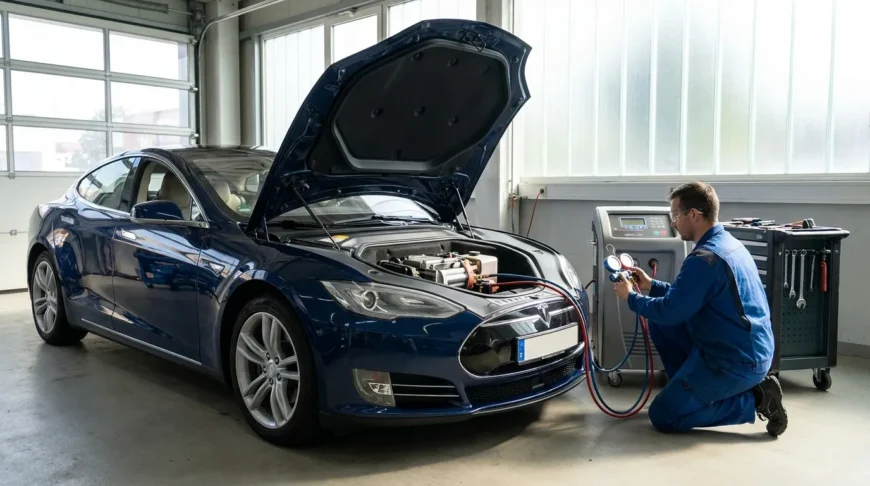

When your car’s AC stops blowing cold air, even a short drive can feel hot, sticky, and frustrating in no time (and yeah, really fast). A quick A/C repair check might be all it takes to uncover a hidden issue before it becomes major. What seems small at first can actually point to a bigger problem somewhere in the system. Wait too long, and that warm air coming through the vents may turn into a repair bill that costs a whole lot more.
Car A/C repair isn’t as simple as it once was. Newer vehicles may use different refrigerants, added sensors, and tighter system controls (so there’s more to watch). Some hybrid and EV models also depend on advanced thermal systems, which changes how car air conditioning repair is done. This guide covers the most common reasons your vents stop blowing cold air, what repair costs may look like, and when it makes sense to have the system checked by a trusted shop such as Reliability Auto Service.
Why Your Car AC Stops Blowing Cold Air
Low refrigerant is the most common reason the vents stop blowing cold air, but that’s not the whole story. Carfax says low refrigerant can be a sign of a leak somewhere in the system, not just a slow drop over time. That means if the refrigerant gets topped off without fixing the leak, the air may feel cold again for a little while, then turn warm again.
Other common problems include a weak compressor, a bad compressor clutch, a clogged cabin air filter, or a failed condenser fan or blend door problem inside the HVAC system. Kelley Blue Book describes the compressor as the heart of the AC system, and when it fails, the cold air can stop completely. Repairs can also get expensive fast.
| Problem | What You May Notice | Typical Repair Level |
|---|---|---|
| Low refrigerant or leak | Air gets warmer over time | Minor to moderate |
| Bad compressor | No cooling, noise, poor cycling | Major |
| Condenser fan failure | Cold at speed, warm at idle | Moderate |
| Clogged cabin air filter | Weak airflow from vents | Minor |
| Blend door or actuator fault | Wrong air temperature inside cabin | Moderate |
There’s also an easy clue that can help narrow down the cause. If the AC feels colder at highway speeds but gets warm in traffic, the problem may be airflow, which often points to the condenser fan. If the airflow feels weak all the time instead, the cabin air filter could be blocked. Details like that can help speed up A/C repair and reduce guesswork, which saves time.
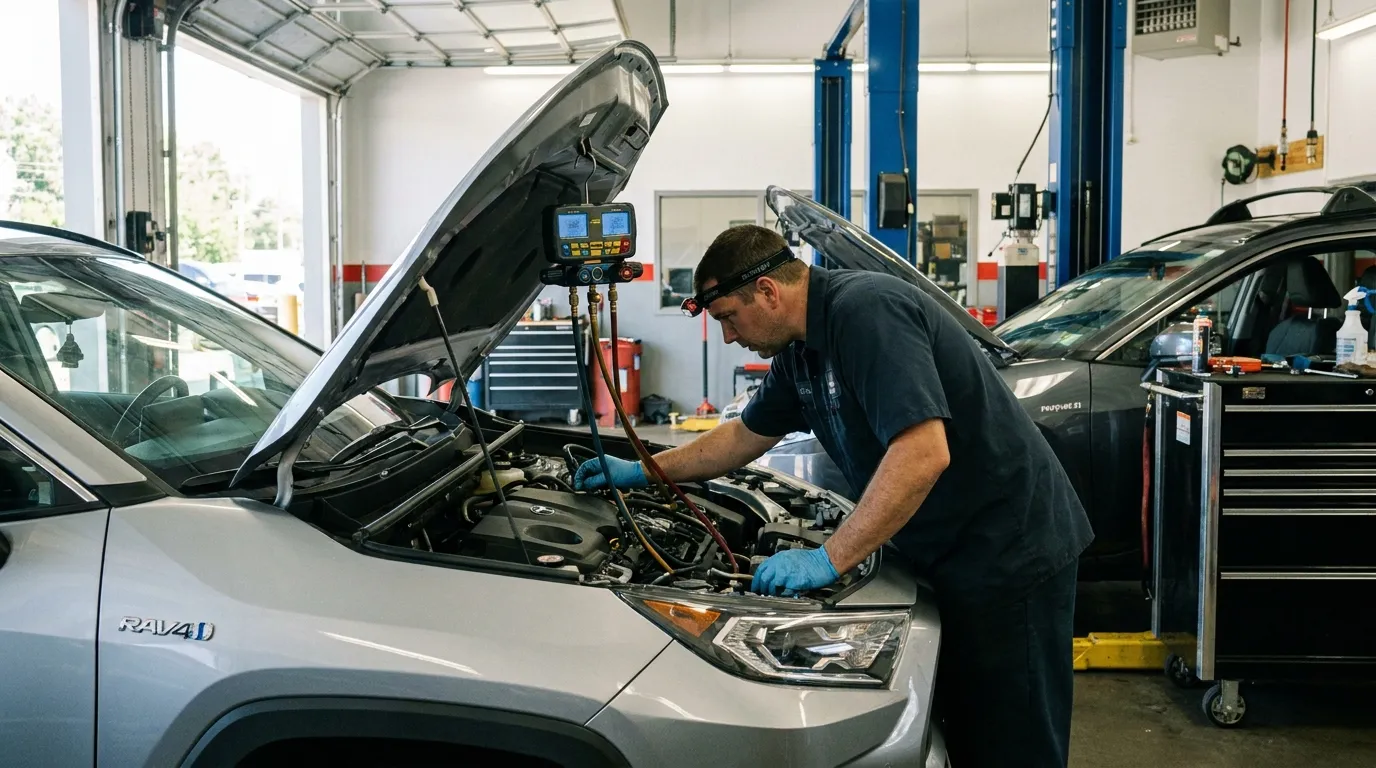
What Modern Car Air Conditioning Repair Often Involves
Modern car air conditioning repair involves more than just topping off refrigerant. Many newer vehicles use R-1234yf instead of the older R-134a, and that changes the work in a few important ways. The service equipment is different, the refrigerant usually costs more, and the system has to be handled properly because it is not a simple swap-in job. Shops working on newer vehicles need proper training and the right tools. There really is not much room for shortcuts.
That matters even more with hybrids and EVs. Some electric vehicles use heat pumps and electric compressors tied into the vehicle’s full thermal management system. In those setups, weak or missing cold air from the vents might come from software controls, electrical faults, battery cooling systems, or regular AC parts. The problem is not always easy to find, which can make diagnosis frustrating.
The AC system of even the best maintained vehicles needs service between 80,000 and 140,000 miles based on how drivers use their cars and their local climate conditions.
It also reminds drivers who stay on top of oil changes and brake service but forget climate control. Preventive checks help here too. A cabin air filter replacement, fan inspection, leak check, and system pressure test can catch issues early before they damage the compressor. That is one reason reliable full-service shops often stand out compared with refill-only service options.
What Car A/C Repair May Cost
What failed matters most for the price. A refrigerant recharge usually costs much less than replacing a compressor. Kelley Blue Book says average dealership A/C repair is around $500, and many common repairs fall in the $384 to $445 range. Recharge service is about $200. Bigger repairs, though, can go well above that.
| Service or Repair | Typical Cost | What It Means |
|---|---|---|
| Basic refrigerant recharge | $150-$350 | May restore cooling if no major part has failed |
| Minor AC repairs | $150-$400 | Small leaks, basic service, filter-related issues |
| Most AC repair jobs | $200-$1,500 | Wide range depending on diagnosis |
| Compressor replacement | $900-$2,500+ | Major repair with parts and labor |
| Large system failure | $1,500-$3,500+ | Compressor or multiple component damage |
Across recent 2025 data, national averages for car AC repair often fall in the $200, $1,500 range for most jobs.
Catching the problem early can help keep the bill lower. If a leak causes low refrigerant and the system keeps running like that, the compressor may start to wear out. What could have been a smaller repair can turn into a major one fast. That can get expensive quickly.
Smart Next Steps for Reliable Cooling
No cold air from the vents, strange noises when the AC is on, weak airflow, or cooling that changes between idle and highway speeds all point to a real problem. Ignoring those signs can let the issue spread, and a proper inspection can find the cause before other parts start failing sooner than they should.
DIY recharge kits are best avoided unless you’re fully trained. Adding refrigerant to a leaking system or putting in too much can create bigger problems fast. A professional A/C repair process should include leak detection, pressure testing, electrical checks, airflow inspection, and making sure the correct refrigerant is being used for your vehicle (that part really matters).
For reliability, safety, long-term vehicle performance, and everyday comfort, car air conditioning repair should be treated like any other important maintenance item. Small problems can turn into expensive ones if they sit too long. Fixing them early can save money and help keep the vehicle ready in every season instead of leading to bigger repairs later.


Leave a Comment