
Summer driving usually puts more stress on a car than almost any other time of year. Heat affects fluids, roads get hotter, and longer trips become more common (hello road trips), which can add up faster than expected. When a vehicle isn’t ready, small issues can quietly turn into expensive breakdowns before anyone notices (which is the worst). That’s why smart car maintenance matters as summer 2026 gets closer and daily driving asks more from every system, from cooling to suspension, in my view.
What catches many drivers off guard is waiting for a warning light. By then, damage may already be done (and it often is). Preventive summer car maintenance usually helps avoid surprise repairs and protect the engine, which also supports family safety on the road (peace of mind counts). It often saves money over time too, especially as repair costs keep going up. Planning ahead is still one of the most useful 2026 vehicle care tips to follow, I think.
This guide starts with the most important checks and builds from there. We’ll walk through a full summer checklist (step by step), covering fluids, tires, batteries, air conditioning, brakes, and newer concerns like electronics and EV readiness. You’ll see what to check, why it matters, and when professional help makes more sense than guessing (which you shouldn’t have to do).
Why Summer Car Maintenance Matters More in 2026
Cars today usually stay on the road longer than they used to, and fixes often cost more when something goes wrong. Recent industry data shows the average driver now spends a little over eleven cents per mile on maintenance and repairs, and that total often grows faster than expected (it sneaks up on you). That adds up to real money. With the typical car now more than twelve years old, daily wear has had extra time to build, and that slow buildup often catches people off guard, in my view.
Here’s a quick look at what drivers are dealing with in 2026. No sugarcoating, you’ll probably recognize some of this.
<DataTable
headers={[“Maintenance Metric”, “Average Value”, “Year”]}
rows=[[“Annual maintenance cost”,“$1,656”,“2025”],[“Vehicle age average”,“12.5 years”,“2026”],[“Repair cost increase”,“6.5%”,“2025-2026”],[“Typical service visit”,“$95, $237”,“2026”]]}
caption=“Vehicle maintenance cost trends affecting summer driving”
/>
What really turns those numbers into real-world problems is heat. Hot weather causes fluids to wear out sooner than planned. Batteries fade faster than many people expect. Tires are more likely to fail, especially on long highway drives. And transmissions and cooling systems work harder in traffic and on summer trips, so small problems often become big ones at the worst time.
As auto repair specialist Don Myers explains:
Vehicle longevity is not primarily a result of factory engineering, but rather the consistent, thoughtful care provided by the owner.
Check Fluids and Cooling Systems First
Summer breakdowns often come back to the cooling system, as annoying as that can be. Engines can start running hot even on fairly mild days, often sooner than drivers expect, and there’s usually very little warning. Once real heat shows up, everything gets pushed closer to its limits. This is especially true on long drives or in stop-and-go traffic, when that temperature gauge slowly creeps up.
An oil change is a good place to start if you’re close to the service interval. In hot weather, oil thins faster and doesn’t protect as well as it should. Fresh oil cuts down friction and internal wear, which matters more during long, hot trips. Taking care of it a little early is often a smart choice for better car maintenance.
Coolant needs the same level of care. Low levels or dirty fluid are some of the most common causes of summer trouble. A proper flush removes rust and buildup that block heat from moving through the radiator. Hoses and belts also deserve a close look. Small signs like cracks, soft spots, or swelling often mean a failure is coming.
Other fluids matter too. Transmission, brake, and power steering fluid all break down faster as temperatures rise, and early problems are easy to miss without checking.
Mixing coolant types, topping off without fixing leaks, or ignoring small drips are common mistakes. A professional inspection can catch issues early, like finding a seeping hose before it bursts.
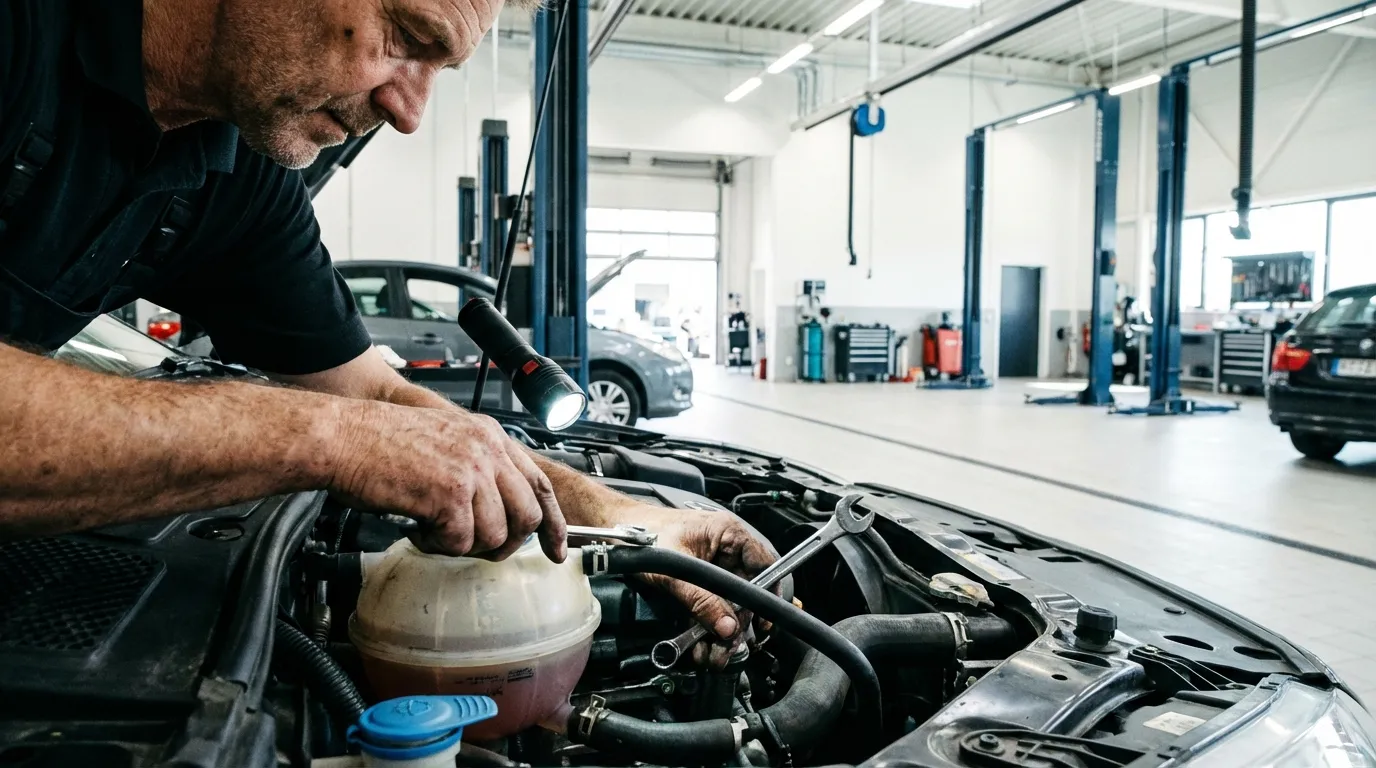
If the engine ever overheats, pull over and stop driving. Even a short drive after that can cause serious damage in just minutes.
Tires, Suspension, and Brakes Under Summer Stress
Hot pavement is tougher on tires than many drivers realize. As temperatures go up, the air inside the tire expands, which usually raises pressure (physics doesn’t make it easy). Overinflated tires wear unevenly and increase the chance of a blowout, especially on long summer highway trips. That’s not something anyone wants when the car is full and the drive keeps going.
A smart starting point is basic tire service. Check tire pressure when the tires are cool, then look closely at tread depth and the sidewalls. Small cracks or bulges can be more serious than they seem, since minor damage can get worse fast. As for balancing and alignment, trouble often shows up as a shaking steering wheel or a car that drifts left or right.
Suspension issues also tend to appear more in summer. Extra passengers and road‑trip gear put more strain on worn parts. Bad shocks don’t just make the ride rough; they can increase stopping distance and cause tires to wear faster.
Brakes need attention too. Heat can lower braking performance, and on older vehicles, thin pads or warped rotors may only show problems in heavy traffic, like inching through a hot afternoon commute.
Shawn Fitzjarrald, owner of Precision Tune Auto Care, described summer stress this way:
Tires get hot, transmissions get hot, engine gets hot, you’re trying to keep them cool, they’re maxed out, you’re sitting in idling.
Battery Testing and Electrical System Health
Many people blame winter when batteries fail, but the real wear often starts in summer. High heat speeds up the chemical reactions inside a battery, and that extra activity usually causes more long-term damage than drivers expect, even when the car seems fine. This kind of wear builds quietly over time and rarely shows up during normal daily driving.
What often surprises people is how a weak battery acts. It might handle short errands, then suddenly quit after sitting in a hot parking lot for an hour. That’s usually when problems show up, not when the car is parked safely at home. Battery testing belongs on every summer checklist, even if nothing feels wrong. The same goes for terminals: they should be clean and tight, not just glanced at. Corrosion raises resistance, creates extra heat, and slowly cuts into performance. Small details make a difference here.
Electrical system diagnostics also matter more than they used to. Modern vehicles rely on sensors, wiring, and control modules just to run as expected. Heat can trigger small electrical issues, which often appear as a random check engine light with no clear cause.
This is where auto diagnostics help. Computer testing can catch trouble codes early, before they turn into real problems. It often points to charging or cooling fan issues that affect reliability, so repairs are based on facts, not guesses. Regular electrical car maintenance ensures all these systems keep performing reliably.
For EVs and hybrids, summer adds another layer. Thermal management systems keep batteries cool, and problems there usually reduce range and long-term battery health. No shortcuts.
Air Conditioning and Cabin Safety in Extreme Heat
People often miss how much a working AC affects safety, not just comfort. On hot days, the temperature inside a parked car can climb much faster than expected, sometimes before a quick errand is done. That surprise catches many drivers off guard.
Pediatric pulmonologist Khalil Savary warns about heat exposure:
As a physician, I’ve seen the effects of heat exposure firsthand: heat stroke, dehydration, dizziness and respiratory distress.
When the talk shifts to vehicle systems, he also says:
A well-functioning AC can prevent overheating, not just for the engine, but for you.
AC service usually covers basics like refrigerant levels, the compressor, and the cabin air filter. When airflow feels weak or the air never cools down, something is usually wrong. Refrigerant costs keep rising, so fixing small issues early can help prevent bigger repair bills later, which often makes more sense.
Cabin air filters matter too. When they clog, airflow drops and the system works harder, leading to quicker wear. Replacing the filter is simple, but easy to forget.
If an AC system is already struggling, extreme heat can bring the problem to the surface even faster.
Planning Preventive Car Maintenance for Long-Term Reliability
Small issues turning into big problems are what usually trip drivers up, which is why a solid summer maintenance plan often starts with manufacturer‑recommended service schedules. These intervals are designed to catch wear early, which can save money and help the car stay reliable over time. In most cases, sticking to them keeps problems where they belong, under the hood, not stranded on the side of the road.
Preventive maintenance means more than checking off a list. It includes fluid services and inspections, especially on newer vehicles, and it works best when small concerns aren’t ignored. That faint oil leak today can slowly turn into a major repair by August, often right before a road trip or a commute you can’t skip.
Professional repair shops often spot things quick checks miss. Full inspections review exhaust, fuel systems, steering parts, and emissions together, making early problems easier to see.
For EV owners, planning is a bit different. Charging systems and detailed electrical checks matter, and as EVs are growing in popularity, this type of care is becoming standard.
Preventive care also comes down to trust. Working with a reliable shop that uses OEM parts and warranty‑backed repairs helps drivers feel confident, knowing the car can handle that August commute without surprises.
Getting Your Car Summer-Ready Starts Now
Getting your car ready for summer is one of the smarter moves to make in 2026, in my view. Heat tends to reveal problems fast, often at the worst times, like when traffic is stuck. Instead of waiting for trouble, preventive car maintenance helps keep drivers safer on hot highways, saves money on future repairs, and supports long-term vehicle health. For most people, that tradeoff makes sense.
What’s nice is how simple this can be. Checking fluids like oil, coolant, and brake fluid can catch many problems early. It also helps to look closely at the cooling system, since hoses and radiators often cause issues. Don’t skip the basics. Tires, brakes, suspension, the battery, and electrical parts all need attention, especially since heat wears batteries down faster. AC performance matters too during slow summer commutes. Warning lights usually mean something, so following service schedules helps avoid surprises.
For drivers who prefer expert help, a professional inspection can cover everything in one visit, which is often easier. Trusted providers like https://reliabilityautoservice.com/ are known for quality repairs, preventative care, and modern needs, including EV readiness. That can mean driving away with cool air in July instead of waiting for a tow truck.
Leave a Comment