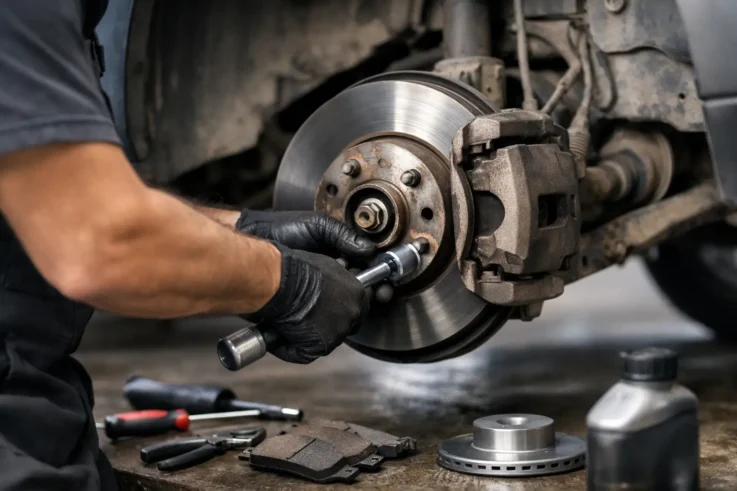

A brake warning light, a squeal at low speed, or a soft pedal usually means one thing – it is time to pay attention before a small issue turns into a safety problem. A proper brake servicing procedure is not just about swapping pads. It is a step-by-step inspection and repair process that checks how the whole system is working so your vehicle can stop smoothly, predictably, and safely.
What a brake servicing procedure should include
Good brake service starts with verification, not guesswork. A technician should ask what you are noticing, whether that is noise, vibration, pulling, longer stopping distance, or a warning light. Those details matter because the same symptom can point to different causes. A squeal may be worn pads, but it can also come from hardware problems or glazed friction material. A pulsation may be warped rotors, but it can also be caused by uneven deposits or suspension issues.
From there, the vehicle is inspected with the wheels removed so the braking components can be seen clearly. Pad thickness, rotor condition, caliper operation, brake hose condition, fluid level, and visible leaks are all part of the picture. On drum brake systems, the shoes, wheel cylinders, springs, and hardware need the same level of attention. If the inspection stops at a quick look through the wheel, that is not a complete service.
A proper procedure also includes measuring, not just looking. Rotors should be checked for thickness and surface condition. Pads should be evaluated for even wear. Caliper slides need to move freely. Brake fluid condition should be assessed because old or moisture-contaminated fluid can affect pedal feel and braking performance. This is where experience matters. Replacing one obvious worn part while missing a sticking caliper or damaged hose usually leads to repeat problems.
The basic brake servicing procedure step by step
The exact repair depends on the vehicle and the condition of the parts, but the brake servicing procedure usually follows a clear sequence.
1. Confirm the concern
The first step is identifying the actual problem. If the customer reports grinding, a road test may confirm metal-to-metal contact. If the complaint is vibration, the technician checks when it happens and whether it shows up only during braking or all the time. This helps separate brake issues from tire, wheel, or suspension problems.
2. Inspect pads, rotors, calipers, and hardware
Once the wheels are off, the technician checks wear patterns and component condition. Even wear usually points to normal service life. Uneven wear may suggest seized slide pins, sticking caliper pistons, or hardware that is no longer doing its job. Rotors are checked for scoring, heat spots, cracking, excessive rust, and thickness. Hardware such as clips and shims is inspected because worn hardware can cause noise and poor pad movement.
3. Service or replace worn components
If pads are worn below spec, they should be replaced. Rotors may need resurfacing or replacement, depending on thickness, condition, and manufacturer recommendations. In many cases, replacement is the better long-term value, especially if the rotors are heavily worn or corroded. Calipers, hoses, wheel cylinders, or drum hardware may also need attention if they are leaking, binding, or damaged.
This is where honest recommendations matter. Not every brake job needs every part. At the same time, cutting corners to save a little now can cost more later if the new pads wear unevenly or the vehicle returns with noise or pulling.
4. Clean and lubricate contact points
This part is easy to overlook and should not be skipped. Brake components need to be cleaned properly, and approved lubricant should be applied at the correct contact points, such as slide pins and pad support areas where the manufacturer calls for it. Too little service here can cause binding. Too much or the wrong product can contaminate friction surfaces and create new problems.
5. Reassemble and torque to spec
After the new or serviced parts are installed, everything is reassembled carefully. Fasteners must be tightened to the proper specification. Wheel lug torque matters too. Over-tightened or unevenly tightened wheels can contribute to vibration concerns and make future service harder than it needs to be.
6. Check brake fluid and bleed if needed
Not every brake service requires bleeding, but some do. If a caliper or wheel cylinder was replaced, air must be removed from the system. If fluid is old or contaminated, a brake fluid exchange may be recommended. Brake fluid does not last forever, and ignoring it can affect system performance over time.
7. Road test and verify
The final step is making sure the repair actually solved the issue. The pedal should feel right, the vehicle should stop evenly, and any previous noise or pull should be gone. If warning lights were present, they should be addressed and cleared only after the fault is resolved.
Why brake service is more than pads and rotors
Many drivers assume brake service means replacing pads once they wear down. Sometimes that is enough, but often there is more going on. Brakes are a system, and the system includes hydraulic pressure, friction material, hardware, fluid, sensors, and in modern vehicles, electronic controls. If one part is not working correctly, the rest of the system has to compensate.
That is why a complete brake servicing procedure matters. It helps catch the issues that are not obvious from the driver seat yet. A slide pin can start sticking before you feel a pull. A brake hose can begin restricting pressure before a caliper fully locks up. Fluid can absorb moisture long before the pedal feels dangerously soft. Taking care of those problems early usually means fewer repairs and less downtime.
Signs you may need a brake servicing procedure now
Some brake problems are loud and obvious. Others build gradually. If you notice squealing, grinding, vibration during braking, a soft pedal, a brake warning light, or the vehicle pulling to one side, it is smart to schedule an inspection soon. A burning smell near a wheel or unusual heat from one corner is also a red flag.
There is also the mileage factor. Even without symptoms, brakes wear over time based on driving habits, traffic, load, and environment. Stop-and-go commuting, hills, towing, and winter driving can all speed up wear. That is why regular inspections are useful. You do not need to wait for metal-on-metal contact to find out your brakes are due.
How long brake service takes and what affects cost
A standard front or rear brake job can often be completed the same day, but timing depends on parts availability, the vehicle design, and whether additional repairs are found. Rust, seized components, electronic parking brake systems, or hydraulic issues can add labor time. The goal should not be the fastest possible repair at any cost. The goal is getting it done correctly so you are not back in the shop next week.
Cost also depends on what the inspection finds. Pads and rotors are common wear items, but calipers, hoses, fluid service, sensors, or drum brake hardware can change the estimate. This is where transparent communication makes a difference. A good shop explains what is worn, what is urgent, and what can be monitored so you can make a clear decision.
What to expect from a trustworthy brake service visit
You should expect a clear inspection, a straightforward estimate, and an explanation that makes sense without a translator. Photos or measured wear readings can help, especially if rotors are below spec or pad wear is uneven. You should also expect parts to be sourced correctly for the vehicle and installed to manufacturer standards.
At Reliability Auto Service, the goal is simple: diagnose the problem, fix what needs fixing, and get you back on the road with confidence. For drivers in Calgary who rely on their vehicles every day, that kind of process matters just as much as the parts themselves.
Brake servicing procedure and long-term reliability
The real value of a proper brake servicing procedure is not just quiet brakes today. It is confidence in traffic, on wet roads, in sudden stops, and during the kind of daily driving that puts your vehicle to work. Thorough service helps your new parts last longer, helps prevent uneven wear, and reduces the chance of being surprised by a brake issue at the worst possible time.
If something feels off, trust that instinct. Brakes rarely fix themselves, and early service is usually simpler than late-stage repair. A careful inspection now can save time, money, and stress later – and that is always a smart move for a vehicle you depend on every day.


Leave a Comment