
That brake pedal feels a little softer than it did last month. The steering wheel shakes when you slow down on Deerfoot. Maybe you hear a high-pitched squeal every morning on the way to work. When you start searching for brakes and rotors repair near me, you usually are not browsing out of curiosity. You want to know what is wrong, how urgent it is, and where to get it fixed without wasting time or money.
Brake problems rarely get better on their own. They usually get more expensive, less safe, and more disruptive the longer they are left alone. The good news is that most brake and rotor issues are straightforward when they are caught early. A good shop will inspect the system, explain what has worn out, and give you clear repair options based on how you actually use your vehicle.
When to search for brakes and rotors repair near me
Most drivers notice brake trouble in the same few ways. The first is noise. Squealing often points to worn pads, while grinding can mean the friction material is gone and metal is contacting metal. That is the kind of wear that can damage rotors quickly.
The second common sign is vibration or pulsing when braking. In many cases, that means the rotors are unevenly worn or have developed heat spots. Drivers sometimes describe this as a shaky steering wheel or a brake pedal that pulses underfoot. It may happen only at highway speeds at first, then become more noticeable over time.
The third sign is a change in pedal feel or stopping distance. If the pedal feels soft, sinks lower than usual, or the vehicle takes longer to stop, it is time for an inspection. That issue may involve pads and rotors, but it can also point to brake fluid, caliper, or hydraulic problems.
You may also notice the vehicle pulling to one side, a brake warning light, or a burning smell after driving. Those are not symptoms to watch for later. They are reasons to book service now.
What brake and rotor repair usually includes
Brake service is not always the same from one vehicle to the next. Some cars need only pads. Others need pads and rotors. In more advanced cases, the repair may also involve calipers, slide pins, hardware, or brake fluid service.
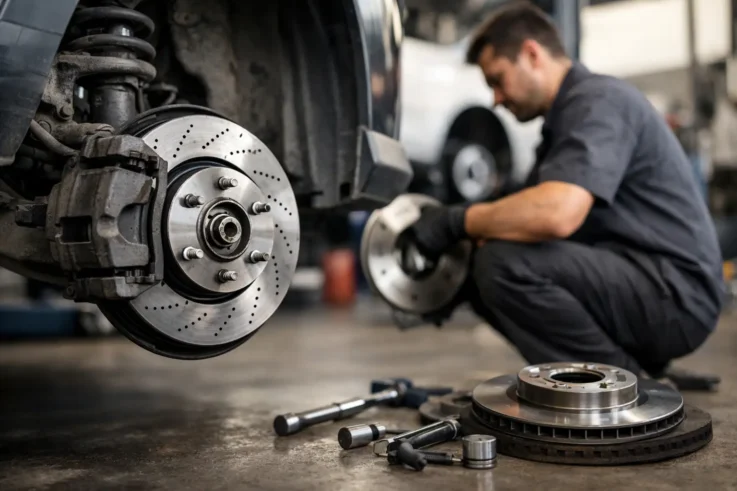
A proper inspection should go beyond a quick look through the wheel spokes. A technician should measure pad thickness, check rotor condition, inspect for scoring or overheating, test caliper operation, and look for uneven wear patterns. Those details matter because they tell you whether the problem is routine wear or a larger issue that will come back if it is not fixed correctly.
In many everyday repairs, replacing pads and rotors together is the most reliable approach. Some rotors can be machined, but that depends on thickness, wear pattern, and manufacturer specifications. Machining may save money in some cases, but replacement is often the better long-term value when rotors are already close to limits or have heat damage.
That is where honest recommendations matter. A shop should explain why a rotor can be resurfaced, replaced, or left alone, not just sell the highest ticket repair.
Why rotors matter as much as brake pads
Brake pads usually get more attention because they are known wear items. Rotors are just as important. They provide the surface the pads clamp onto, and they handle a huge amount of heat every time you slow down.
When rotors wear unevenly, become too thin, or develop cracks and hard spots, braking performance suffers. Even if new pads are installed, the system may still shake, squeal, or wear out prematurely if the rotors are not addressed at the same time.
There is also a safety factor. A healthy brake system should stop smoothly, predictably, and evenly. That matters in daily commuting, sudden stops, wet roads, and winter driving. Reliable braking is not about comfort alone. It is about control.
Pads only or pads and rotors?
It depends on the condition of the parts. If the pads are worn but the rotors are smooth, within spec, and wearing evenly, a pad replacement may be enough. If the rotors are grooved, warped, rust-lipped, heat-checked, or below minimum thickness, replacing both usually makes more sense.
A good shop will show you the wear and explain the trade-off. The cheapest repair today is not always the lowest cost over the next 12 months.
What affects brake repair cost
Drivers often want a simple number, but brake repair pricing depends on several things. Vehicle make and model matter. Parts quality matters. Front brakes and rear brakes may wear differently, and some vehicles use more complex rotor or caliper designs than others.
Labor can vary too. On some vehicles, brake service is straightforward. On others, corrosion, seized hardware, electronic parking brake systems, or damaged components add time to the job. If a caliper is sticking or brake fluid has been neglected, the repair scope can change.
The important part is transparency. You should receive a clear estimate before work begins, along with an explanation of what is required now versus what may be worth planning for later. That helps you make a practical decision without guesswork.
How to choose the right local brake shop
If you are searching for brakes and rotors repair near me, convenience matters, but so does consistency. You want a shop that does more than swap parts. You want one that diagnoses the cause, uses quality components, and checks the full system before sending the car back on the road.
Look for a repair facility that explains findings in plain language, provides upfront pricing, and stands behind the work. Brake repairs should not feel confusing or rushed. You should know what was replaced, why it was needed, and what kind of warranty coverage applies.
It also helps to choose a shop that can handle more than one issue if the inspection turns up related concerns. Brake wear sometimes overlaps with tire wear, suspension problems, or fluid issues. A full-service shop can save time by dealing with the bigger picture in one visit instead of sending you somewhere else.
What a good visit should feel like
You should be able to describe the symptom, get a timely inspection, and receive a direct recommendation. If the brakes are unsafe, the shop should say so clearly. If the issue is minor and can wait a short time, they should say that too. Trust is built when the advice matches the condition of the vehicle, not a sales script.
That is also where customer support matters. For busy families and commuters, scheduling flexibility, shuttle service, loaner options, and efficient turnaround are not extras. They make the repair manageable.
Don’t wait for obvious failure
Many drivers postpone brake service because the car still stops. That is a risky standard. Brakes can be worn well past their best performance before they fully fail, and by then the repair is often more expensive. A set of worn pads can turn into damaged rotors. A sticking caliper can overheat one corner of the vehicle and create uneven wear fast.
Routine inspections help catch those issues earlier. If your vehicle is already in for tire service, an oil change, or seasonal maintenance, it makes sense to have the braking system checked at the same time. That does not mean replacing parts unnecessarily. It means knowing where things stand before a small issue becomes a major one.
For drivers in Calgary, brake wear can also be affected by traffic, temperature swings, moisture, and winter road conditions. That makes regular inspections even more useful, especially if you rely on your vehicle every day.
A dependable shop like Reliability Auto Service understands that most customers are not looking for technical lectures. They want a safe car, a fair estimate, quality workmanship, and a repair done right the first time.
If your brakes are making noise, vibrating, or just not feeling right, trust that instinct. Getting them checked now is usually the fastest path back to a vehicle that feels safe, steady, and ready for the road.


Leave a Comment