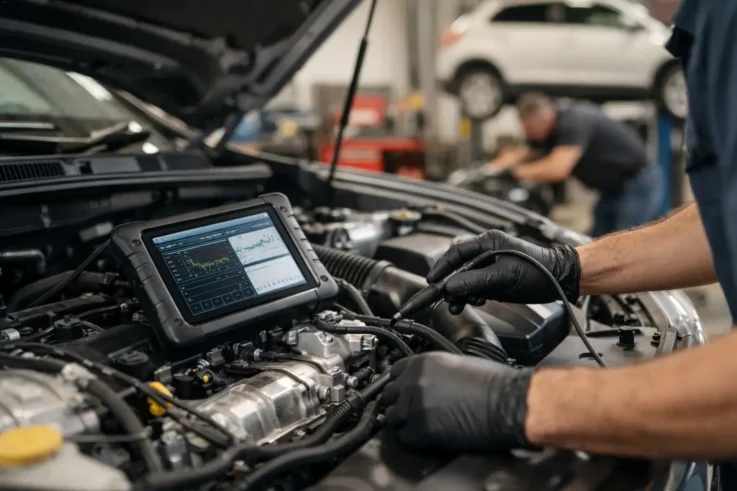

That check engine light rarely comes on at a convenient time. Maybe your car starts running rough on the way to work, idles harder than usual in the driveway, or loses power when you try to merge. When you start searching for engine diagnostic and repair near me, what you really want is simple – find the problem quickly, get a clear answer, and get back on the road without wasting time or money.
Engine problems can feel expensive before anyone has even opened the hood. That is why the first step matters so much. A good shop does not jump straight to replacing parts. It starts with proper testing, confirms what is actually wrong, and explains what needs attention now versus what can wait.
What engine diagnostic and repair near me should actually include
A lot of drivers hear the word diagnostics and think it means plugging in a scan tool and reading a code. That is part of the process, but it is not the whole job. A fault code points a technician in the right direction. It does not always name the failed part.
For example, a code related to misfiring could come from a bad spark plug, a failing ignition coil, a fuel delivery problem, low compression, or even a vacuum leak. Replacing the first obvious part without testing can fix nothing and add cost. Real engine diagnostics means checking data, inspecting components, testing systems, and matching the results to the symptoms you are noticing while driving.
Once the cause is confirmed, repair should be just as clear. That might mean replacing ignition parts, repairing a leak, addressing a sensor issue, fixing a timing problem, or handling more involved internal engine work. The right shop should be able to explain the repair in plain language and tell you how urgent it is.
Common signs your engine needs attention
Some engine problems announce themselves with a warning light. Others show up in the way the vehicle feels. If your car has become less responsive, harder to start, noisier, or less fuel efficient, those changes deserve a closer look.
Rough idle is a common early symptom. If the engine shakes at a stop or feels uneven while running, the cause could be ignition, fuel, airflow, or mechanical wear. Hesitation during acceleration is another sign that something is off. Drivers often describe it as a lag, stumble, or lack of power.
You may also notice smoke from the exhaust, fluid leaks, knocking sounds, or an engine that runs hotter than normal. Sometimes the issue is relatively contained, like a failed sensor or worn spark plugs. Other times it points to a larger repair. The difference is diagnosis. Catching the problem early usually gives you more options and helps avoid secondary damage.
Why a check engine light should not be ignored
A check engine light can mean many different things. In some cases, the vehicle still drives normally and the issue is minor. In others, performance drops right away or the light starts flashing, which can signal a more serious problem that should be addressed as soon as possible.
What matters most is not guessing. If the light is on, have it checked. If it is flashing, it is smart to stop driving and ask a professional what to do next. Continued driving with an active misfire or overheating condition can turn a manageable repair into a much more expensive one.
The goal is not to scare you. It is to be practical. Warning lights are there to help you catch problems before they get worse. A fast inspection and diagnostic process can save both downtime and repair costs.
How to choose the right shop for engine repair
If you are comparing local shops, look beyond price alone. Engine work is one area where accuracy matters as much as the repair itself. A lower estimate is not much of a bargain if the diagnosis is incomplete or the problem comes back.
A dependable shop should be willing to explain what testing was performed, what they found, and why the recommended repair makes sense. Clear estimates matter too. You should know whether the quote covers diagnostic time, parts, labor, and any additional steps that may be needed once the repair begins.
Convenience also matters more than people think. If your vehicle is how you get to work, school pickups, or client visits, the best repair experience is one that minimizes disruption. Shops that offer practical support like scheduling flexibility, inspections, warranty coverage, shuttle options, or loaner vehicles often provide more real value than a shop that only focuses on the lowest number.
What happens during a professional engine diagnostic
A proper diagnostic appointment usually starts with your description of the problem. That information is useful. When the issue happens, how often it happens, whether it occurs cold or warm, and what warning lights are on can all help narrow the source.
From there, a technician will typically scan for codes and review live system data. They may inspect ignition components, check for leaks, test battery and charging output, evaluate fuel and air systems, and verify mechanical condition where needed. In some cases, the next step is straightforward. In others, the issue may require more involved testing because symptoms overlap.
That can be frustrating when you want a quick answer, but careful testing is usually what protects you from paying for unnecessary parts. Good diagnostics is not about making the process longer. It is about making the repair right.
Repairs can range from simple to complex
One reason engine issues worry drivers is that the term engine repair covers a wide range. Sometimes the fix is routine. Spark plugs, ignition coils, sensors, belts, or gaskets can often be handled without major downtime. Other repairs are more involved, such as timing components, cooling system failures that have affected engine operation, or internal mechanical concerns.
This is where honest communication matters. Not every engine problem calls for major repair, and not every older vehicle makes sense to invest in the same way. It depends on the condition of the car, the cost of the repair, how long you plan to keep it, and whether related systems also need work.
A trustworthy shop will talk through those trade-offs with you. Sometimes the right move is to complete the repair and stay ahead on maintenance. Sometimes it makes sense to address the safety and reliability issues first, then plan the rest over time.
The value of a one-stop shop
Engine problems do not always stay neatly within the engine bay. A drivability complaint can involve the electrical system, battery performance, cooling issues, fuel delivery, emissions components, or transmission behavior. That is why broader repair capability matters.
A full-service shop can often diagnose the whole picture faster because it is equipped to inspect related systems at the same visit. If your check engine light is tied to a charging issue, if poor engine performance is affected by overdue maintenance, or if a drivability concern overlaps with another system, you do not want to bounce between multiple specialists just to get answers.
For everyday drivers, that kind of coverage saves time and reduces friction. It also helps build continuity. When one shop knows your vehicle history, routine service and larger repairs tend to get handled more efficiently.
When to schedule service instead of waiting
If the vehicle still starts and drives, it is easy to put off engine service for another week. Sometimes that works out. Sometimes it does not. The smarter approach is to schedule service when symptoms are new, even if they seem small.
That is especially true if you are noticing repeated hard starts, rough running, reduced fuel economy, burning smells, visible smoke, or warning lights. Those issues rarely improve on their own. They either stay the same until diagnosed or gradually become more expensive.
For drivers in busy routines, speed and clarity matter. You want a shop that can inspect the vehicle promptly, explain the next step without jargon, and handle both the diagnosis and the repair with fair, transparent pricing. That is the kind of support people are really looking for when they search locally for help.
If you are looking for engine diagnostic and repair near me, choose a shop that treats the problem like more than a code on a screen. The right repair starts with accurate testing, honest recommendations, and a focus on getting your vehicle dependable again – not just temporarily quieter. A good shop should leave you with a working vehicle and more confidence the next time you turn the key.


Leave a Comment