
A car should usually feel steady, smooth, and easy to control. So when it starts pulling to one side, bouncing over bumps, shaking in the wheel, or making clunking noises, even on normal roads, the steering and suspension system may need attention. That’s a warning sign drivers should take seriously. These parts are not just about comfort, either. They also help keep the tires firmly on the road, which affects braking, cornering, and overall safety. Regular steering and suspension services help ensure these systems perform reliably and safely.
Good steering and suspension service can often catch small issues before they turn into bigger, more expensive repairs. It can also help protect tire life and improve handling, which drivers will likely notice pretty fast. In this guide, readers will learn which warning signs to watch for, when to schedule suspension repair, and why wheel alignment matters so much. For drivers looking for dependable care and long-term performance, shops like Reliability Auto Service focus on preventive maintenance that helps keep vehicles safe and reliable.
Why steering and suspension services matter
Your steering and suspension system includes parts like shocks, struts, control arms, bushings, ball joints, and steering linkages. Together, these parts absorb road impact and help keep your vehicle stable in turns, over bumps, and on uneven pavement. They may seem small, but they do a lot and are easy to overlook. When one part starts to wear out, it can affect the rest of the system too. That often leads to poor handling, and you’ll probably notice the car doesn’t feel as steady as usual. It can also cause uneven tire wear and even longer stopping distances.
Ignoring steering and suspension issues can lead to uneven tire wear, reduced braking efficiency, and even loss of control.
Current research recommends a wheel alignment check at least once a year. Suspension and steering inspections are also often recommended every 50,000 miles. Tire rotation every 6,000 to 8,000 miles can help spot early wear patterns too. It’s a simple habit, and in most cases it really helps.
| Maintenance item | Recommended timing | Why it matters |
|---|---|---|
| Wheel alignment | At least once a year | Helps prevent pulling and uneven tire wear |
| Tire rotation | Every 6,000 to 8,000 miles | Reveals wear patterns linked to suspension issues |
| Steering and suspension inspection | About every 50,000 miles | Finds worn parts before they affect safety |
If you drive on rough roads, hit potholes often, or have had a curb strike, you may need service sooner. Bad road conditions are one of the main reasons suspension parts wear out faster, so this can happen earlier than many drivers expect.
Common signs you may need suspension repair
A lot of suspension problems start small. You might notice the car dipping forward when braking, leaning too much in turns, feeling loose at highway speeds, or just not feeling as steady on the road as it used to, which is easy to ignore at first. For some drivers, unusual tire wear is the first sign. Others notice the steering wheel sitting a little off center.
When shocks and struts wear out, the effects are subtle at first, slightly longer stopping distances, more pronounced swaying, and decreased stability.
That is why taking care of suspension repair early usually helps. Waiting too long can make repair costs go up fast. Research shows the average shock or strut replacement cost is about $1,222 each. A control arm replacement can cost around $895 per arm, and a control arm bushing replacement can be around $427 each.
| Repair | Average cost | Why early diagnosis helps |
|---|---|---|
| Shock or strut replacement | $1,222 each | Can prevent added tire and handling problems |
| Control arm replacement | $895 per arm | Stops wear from spreading to nearby parts |
| Control arm bushing replacement | $427 each | Restores stability before larger damage develops |
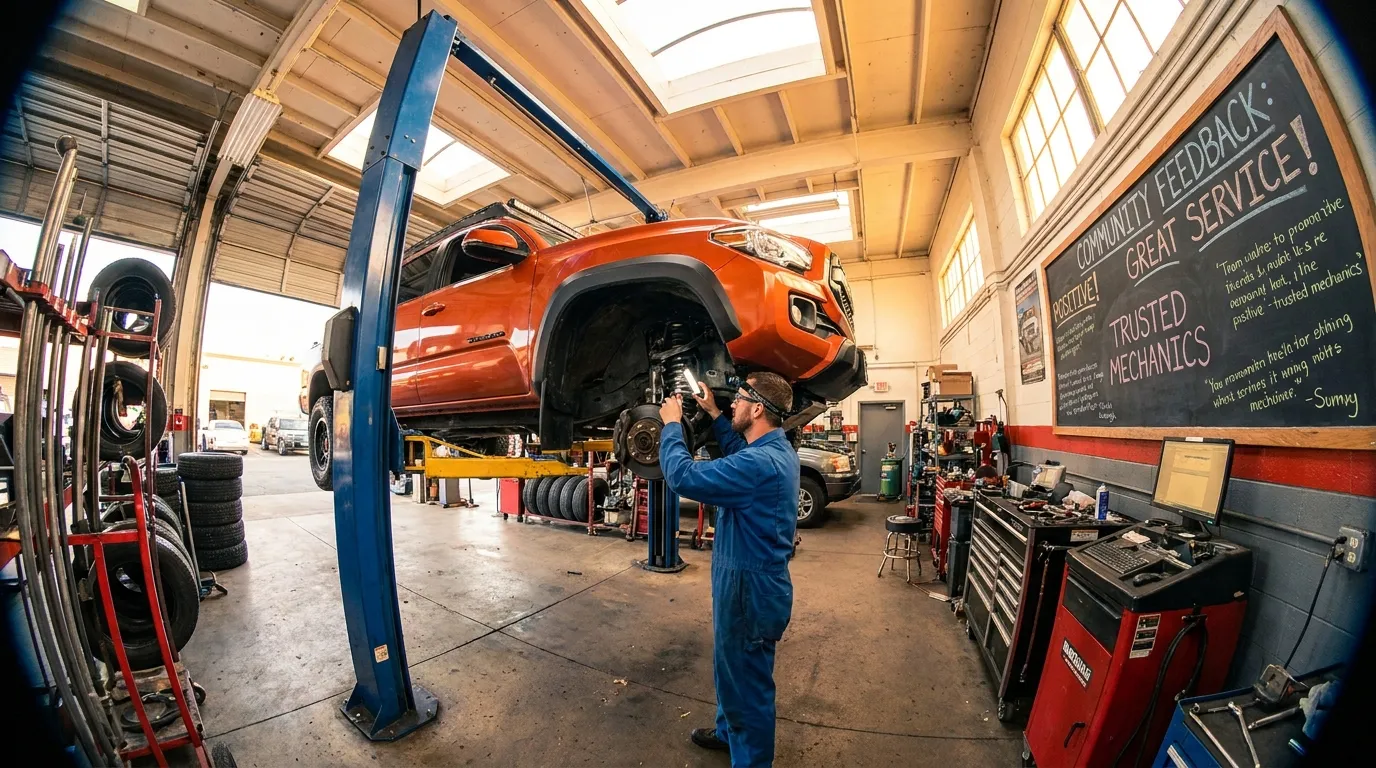
If the vehicle clunks over bumps, bounces more than usual, drifts while driving straight, or feels unsettled on the road, it is smart to book steering and suspension services sooner rather than later in most cases. Finding it early can often help avoid bigger repair bills later.
Why wheel alignment is now a bigger safety issue
A lot of drivers think wheel alignment only matters when the tires start wearing out, but it usually affects a lot more than that. When the alignment is correct, the tires touch the road at the right angle, and even if that sounds small, it can make a real difference. The vehicle usually handles better, the tread often wears more evenly, and the car reacts the way it should in normal daily driving.
What makes alignment a bigger issue today is how it connects to modern safety tech. On newer vehicles, accurate steering geometry may help features like lane-keeping assist and other driver-assist systems work properly, probably more than many people realize. Industry reports suggest that suspension changes, worn parts, and alignment problems can affect how well those systems work. So this is no longer just about ride comfort. In my view, it is also part of safe day-to-day vehicle use.
It is worth thinking about an alignment after hitting a pothole, brushing a curb, replacing suspension parts, or noticing that the steering wheel sits crooked. Uneven tread wear is another clear sign. A quick check now can often help you avoid paying more for tires later.
A smart maintenance plan for safer handling
A smart approach is usually pretty simple: don’t wait for a major breakdown. During regular service visits, have the suspension and steering checked, especially if the vehicle feels different than usual, even in a small way. It also helps to ask for tire wear checks, yearly wheel alignment inspections, and a careful check of shocks, struts, bushings, and steering parts.
This becomes even more important as vehicles keep changing. EVs and newer models can put different loads on chassis systems, and many now come with more advanced suspension designs. Because of that, accurate diagnosis and quality parts matter even more for strong long-term performance. In this kind of work, the small details can often make a bigger difference than people expect.
Steering and suspension service is really about confidence behind the wheel. When a car tracks straight on the highway, corners smoothly, and brakes with stability, each drive usually feels safer. If there has been bouncing, pulling, noise, or uneven tire wear, now is probably a good time to schedule suspension repair and wheel alignment before a small problem turns into a costly one.


Leave a Comment