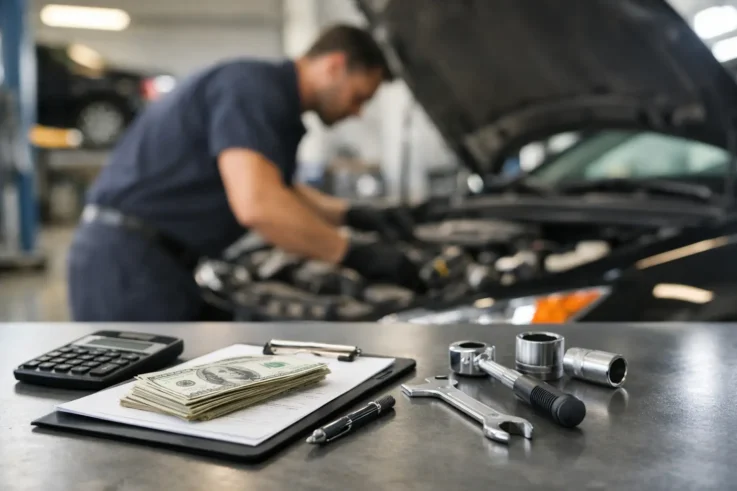

That dashboard light rarely shows up at a convenient time. Most drivers ask the same question right away – how much auto repair services cost, and whether the fix is going to be a quick maintenance visit or a larger repair bill. The honest answer is that pricing depends on the problem, the parts involved, labor time, and how far the issue has progressed before the car reaches the shop.
If you want a useful number, not a vague guess, it helps to look at repair costs the same way a professional shop does. Some services are predictable, like oil changes or brake pad replacement. Others require testing first, especially when the symptom could point to several causes. That is why the best estimate starts with a proper inspection and a clear explanation of what is necessary now, what can wait, and what could become more expensive if ignored.
How much auto repair services usually cost
Auto repair pricing usually falls into three groups: routine maintenance, wear-and-tear repairs, and diagnostic or major mechanical work. Routine maintenance is the most predictable. Oil and filter service, tire rotation, battery testing, and standard inspections tend to stay within a narrower range because the labor is straightforward and the parts are common.
Wear-and-tear repairs can vary more. Brake work, suspension repairs, tires, batteries, and belts depend on vehicle size, part quality, and whether related components also need attention. A basic brake pad job costs less than pads and rotors on all four wheels. A single worn suspension part is different from a full front-end refresh.
Major repairs have the widest range. Engine issues, transmission concerns, electrical faults, and in-depth drivability problems often begin with testing. Until the technician confirms the failure, quoting an exact final number would be guesswork. Good shops avoid that kind of guessing because it leads to surprises nobody wants.
What affects how much auto repair services cost
Labor is one of the biggest factors. Some jobs take under an hour. Others require several hours of disassembly, testing, part replacement, and reassembly. A starter motor on one vehicle may be easy to access, while on another it may sit under multiple components that have to be removed first.
Parts also make a major difference. Original-equipment level parts, aftermarket alternatives, remanufactured components, and specialty items all come with different price points. The cheapest part is not always the best value if it wears out early or causes repeat issues. For many drivers, the better decision is the part that balances price, reliability, and warranty coverage.
Vehicle type matters too. A compact sedan generally costs less to maintain than a heavy-duty SUV, luxury model, or imported vehicle with specialized parts. Newer vehicles may need more advanced diagnostics, while older vehicles can reveal additional wear once the repair starts. That is not a sign of poor service. It is often the reality of working on a car with miles and age on it.
Timing also affects cost. Catch a coolant leak early and the repair may stay manageable. Keep driving until the engine overheats, and the bill can change dramatically. The same goes for brakes, tires, suspension noise, and charging system problems. Small issues usually stay smaller when they are diagnosed early.
Typical price ranges for common services
Drivers usually want ballpark numbers, and that is reasonable. Exact pricing depends on the vehicle and parts selected, but common services often fall within familiar ranges.
Oil changes are usually among the lower-cost visits, though synthetic oil, larger engines, and specialty filters raise the total. Brake service can range from a relatively modest pad replacement on one axle to a more involved job with rotors, hardware, and fluid service. Battery replacement is often straightforward, but some vehicles need battery registration or additional electrical setup after installation.
Tires vary based on brand, size, and season. Suspension repairs can be minor if one component is worn, or more expensive if multiple parts are loose or damaged. Check engine light diagnosis may begin with a diagnostic fee, then move to repair pricing once the fault is confirmed. Transmission and engine repairs sit at the higher end because they require more labor, more parts, or both.
The important point is this: a fair estimate should match the actual work. If two quotes are far apart, the difference may come from part quality, warranty terms, included services, or whether the shop is pricing only the visible issue instead of the full repair needed to make the vehicle dependable.
Why estimates can change after inspection
This is where many drivers get frustrated, and understandably so. You come in expecting one repair, and then the inspection shows related wear or a different root cause. That does not always mean the shop is upselling. In many cases, the original symptom was only part of the story.
For example, a vibration might seem like a tire issue but turn out to involve suspension wear. Uneven brake wear might point to more than pads alone. A dead battery may actually trace back to a charging system problem. If the estimate changes after testing, what matters is whether the shop explains why, shows the findings clearly, and gives you options when appropriate.
Transparent pricing should include labor, parts, shop supplies if applicable, and any diagnostic time needed to reach an accurate answer. It should also separate urgent repairs from recommended maintenance so you can make an informed decision.
How to avoid paying more than you need to
The easiest way to control repair costs is not waiting for a breakdown. Preventive maintenance is usually far less expensive than emergency repair. Regular oil service, brake inspections, fluid checks, battery testing, and tire maintenance help catch problems before they turn into roadside failures or expensive damage.
It also helps to be specific about symptoms. Tell the shop when the noise happens, how long the warning light has been on, whether the issue occurs during braking, acceleration, cold starts, or highway driving. Good information shortens diagnostic time and improves accuracy.
Another smart move is asking what is urgent and what can be scheduled later. Not every recommendation has to happen the same day. A trustworthy shop will tell you which items affect safety or reliability right now and which ones should be planned for the near future.
Finally, look at overall value, not just the lowest number. Fast, reliable service, quality parts, warranty coverage, and the ability to handle both maintenance and deeper repairs in one place often save time and money over the long run. If a cheaper repair fails early or misses the real issue, it was not really cheaper.
When a higher repair bill still makes sense
Not every expensive repair is a bad decision. If the vehicle is otherwise in good condition, up to date on maintenance, and paid off, repairing it may cost far less than replacing it. On the other hand, if multiple major systems are failing at once, it may be worth discussing priorities and timing before approving everything immediately.
This is where honest guidance matters. A dependable shop should help you weigh the repair against the vehicle’s condition, safety, and expected remaining life. Some repairs restore years of reliable use. Others may only delay bigger decisions. There is no one-size-fits-all answer, which is why clear communication matters as much as the wrench work.
Choosing a shop that gives clear answers
If you are comparing shops, pay attention to how they talk about pricing. Do they explain the diagnostic process? Do they provide upfront estimates before repairs begin? Do they discuss part options, warranty coverage, and realistic timelines? Those details usually tell you more than a bargain headline ever will.
For drivers in Calgary and Airdrie, convenience also matters. A shop that can inspect the vehicle, source the right parts, complete the repair correctly, and help reduce downtime with practical support makes the whole process easier. That is especially true when your vehicle is how you get to work, school, appointments, and everything else on the calendar.
A fair auto repair experience should leave you with more confidence, not more questions. When pricing is explained clearly and the repair is done right the first time, you are not just paying for parts and labor. You are paying for safety, reliability, and fewer interruptions to your day.
If you are wondering how much auto repair services will cost for your vehicle, the best next step is a proper inspection and a written estimate based on what your car actually needs. That is how you avoid guesswork, make smart decisions, and keep your vehicle road-ready without adding unnecessary stress.


Leave a Comment