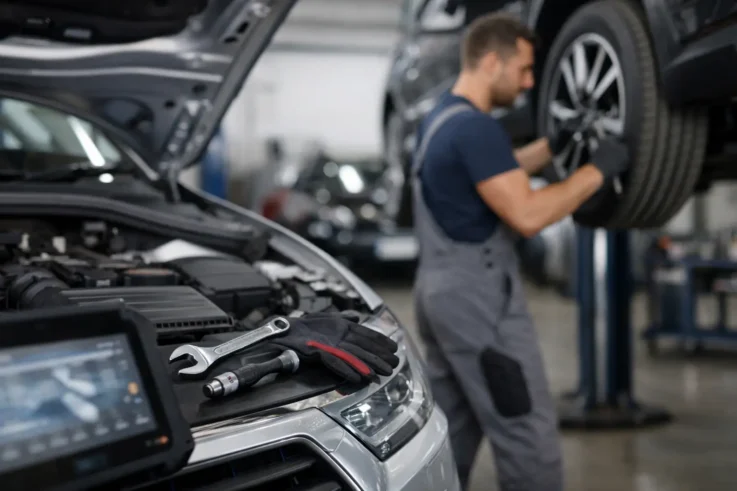

A car usually does not fail all at once. It starts with small signs – a brake squeal in the morning, a battery that cranks a little slower, a check engine light that comes and goes, or tires wearing unevenly. That is why so many drivers ask, what is automotive repair and maintenance, and why does it matter so much? The short answer is simple: it is the work that keeps your vehicle safe, reliable, and ready for daily use, whether that means preventing problems before they start or fixing issues once they show up.
For most vehicle owners, the real value is not in the terminology. It is in knowing what needs attention now, what can wait, and what helps you avoid bigger repair bills later. When a shop explains that clearly, automotive care feels a lot more manageable.
What is automotive repair and maintenance in simple terms?
Automotive maintenance is the routine service your vehicle needs on a regular schedule. Think oil changes, filter replacements, tire rotations, fluid checks, inspections, and brake service before parts are fully worn out. Maintenance is planned. It is based on mileage, time, driving habits, and the condition of the vehicle.
Automotive repair is different. Repair happens when something is no longer working properly or has already failed. That can include replacing a bad alternator, diagnosing an engine misfire, fixing suspension problems, repairing electrical faults, or replacing worn brake components after they have reached the end of their service life.
The two go together. Good maintenance reduces the chances of major breakdowns, but it does not eliminate repairs completely. Parts wear out. Sensors fail. Road conditions, weather, and stop-and-go driving all take a toll. A dependable shop handles both sides of the job, which is why many drivers prefer one place that can manage routine service and deeper mechanical work under the same roof.
Why regular service matters more than most drivers think
Most people are not looking for perfect vehicle performance. They want their car to start, stop, steer, and get them where they need to go without surprise downtime. That is where maintenance earns its value.
Routine service helps catch problems early. A multi-point inspection during an oil change might reveal a weak battery, low brake pad life, uneven tire wear, or a leaking shock. None of those issues may feel urgent today, but each one can turn into a bigger problem if ignored. Early attention usually means lower cost, less inconvenience, and fewer safety concerns.
There is also a financial trade-off. Some drivers delay maintenance to save money in the short term. Sometimes that works for a while. But skipped service often leads to more expensive repairs later. Dirty oil can shorten engine life. Worn tires can affect braking and fuel economy. Ignoring a charging issue can leave you stranded. Preventive care is rarely the cheapest visit in the moment, but it is often the cheaper path over the life of the vehicle.
Common maintenance services most vehicles need
The exact schedule depends on the make, model, age, and how the vehicle is driven, but some services come up for almost everyone.
Oil and filter changes are the basics. Clean oil protects engine components from heat and wear. Wait too long, and the engine has to work harder under poor lubrication.
Tire service matters just as much. Rotation, balancing, alignment checks, and timely replacement all affect how the vehicle handles and how evenly the tires wear. Suspension issues often show up in the tires first, which is one reason tire inspections are so useful.
Brake maintenance is another major category. Pads, rotors, and brake fluid all need periodic attention. Some brake wear is gradual and easy to miss from the driver’s seat, so inspections matter.
Fluid services also play a big role. Transmission fluid, coolant, brake fluid, and power steering fluid all support systems that can be expensive to repair if neglected. Not every fluid needs frequent replacement, but each one has a service life.
Battery and charging system checks are often overlooked until the car will not start. Testing battery condition and charging output can reveal weakness before it becomes a no-start problem.
What counts as automotive repair?
If maintenance is scheduled care, repair is corrective work. It starts when a symptom appears, a warning light comes on, or an inspection finds a problem that needs to be fixed.
Engine repair can range from replacing ignition coils or spark plugs to addressing oil leaks, cooling problems, or internal engine damage. Brake repair may involve pads and rotors, but it can also include calipers, hydraulic issues, or ABS-related faults.
Suspension and steering repairs are common as vehicles age. Struts, shocks, ball joints, control arms, and tie rods all wear over time, especially on rough roads. Electrical diagnostics are another big area because modern vehicles rely heavily on sensors, modules, and wiring. A single warning light can have several possible causes, so proper testing matters.
Transmission-related work can also fall under repair. Sometimes the issue is minor, like a fluid leak or sensor problem. Other times it is more serious. That is one reason early diagnosis is so valuable. Catching drivability issues early may help avoid more extensive damage.
What is automotive repair and maintenance supposed to include from a full-service shop?
A full-service shop should do more than change oil and replace parts. It should help you understand your vehicle’s condition, explain what is urgent versus what can be planned, and make it easier to keep the car road-ready.
That usually means diagnostics, routine maintenance, mechanical repair, inspections, tires, battery testing, and support for common warning signs like vibration, fluid leaks, poor starting, or unusual noises. It may also include convenience services such as warranty-backed repairs, sourced replacement parts, and options that reduce downtime.
For drivers, that one-stop approach matters. If your shop can inspect brakes during a routine visit, diagnose a check engine light accurately, handle suspension concerns, and take care of tire replacement when needed, you spend less time coordinating multiple providers and more time actually solving the problem.
How to know when your vehicle needs attention
Some service needs are predictable because they follow mileage intervals. Others depend on symptoms. The tricky part is that not every issue feels dramatic at first.
If your vehicle pulls to one side, takes longer to stop, rides rough, struggles to start, overheats, shifts oddly, or shows a dashboard warning light, it is time to get it checked. Strange smells, fluid spots under the car, or new sounds during turns or braking are also worth attention.
At the same time, not every symptom means the worst-case scenario. A check engine light could point to anything from a loose fuel cap to a drivability issue that needs repair. That is why clear diagnostics matter more than guesswork. Replacing parts without testing can waste time and money.
The real goal: fewer surprises and more dependable miles
Good automotive care is not about doing every possible service every time. It is about making smart decisions based on the vehicle’s condition, your driving habits, and your budget. A commuter car with high mileage may need a different plan than a lightly used family vehicle. An older car may call for more strategic choices than a newer one under warranty.
What matters most is consistency. When maintenance is done on time and repairs are handled before they escalate, vehicles tend to last longer, perform better, and create fewer interruptions. That is the practical answer to what is automotive repair and maintenance – it is the ongoing work of protecting your vehicle from avoidable wear, correcting problems when they happen, and keeping you confident every time you turn the key.
If you are ever unsure whether your vehicle needs service now or later, ask for a clear inspection and straightforward explanation. The right shop will help you prioritize what matters, skip what does not, and keep your next drive uneventful in the best possible way.


Leave a Comment