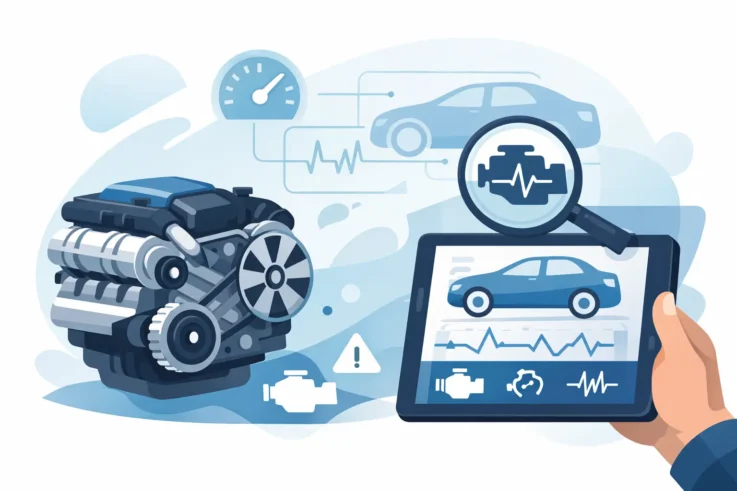

That check engine light rarely comes on at a convenient time. Maybe the car still seems to drive fine, or maybe it feels rough, slow, or harder to start than usual. Either way, most drivers ask the same thing: what does engine diagnostics mean, and what happens when a shop runs one?
In simple terms, engine diagnostics is the process of using your vehicle’s onboard computer, testing equipment, and hands-on inspection to find out what is causing a warning light, performance issue, or drivability problem. It is not just plugging in a scanner and reading a code. A proper diagnostic service is about identifying the real cause of the issue so the repair is accurate the first time.
What does engine diagnostics mean in real-world terms?
For most drivers, engine diagnostics means getting clear answers. Your vehicle has sensors and control modules that constantly monitor how the engine and related systems are performing. When something falls outside the normal range, the system may store a fault code and turn on the check engine light.
That sounds straightforward, but the code itself usually points to an area of concern, not always the failed part. For example, a code related to an oxygen sensor does not automatically mean the sensor is bad. The real issue could be wiring damage, an exhaust leak, a fuel mixture problem, or another engine condition affecting the reading.
That is why diagnostics matters. It helps separate symptoms from the actual fault. Good testing can save time, avoid replacing parts that still work, and reduce the chance of the same problem coming back.
What an engine diagnostic test actually checks
A modern diagnostic appointment usually starts with a scan tool connected to the vehicle’s computer system. That allows the technician to read stored trouble codes, pending codes, and live data from sensors throughout the engine management system.
From there, the process may include checking fuel trim readings, ignition performance, airflow data, charging system voltage, emissions system operation, and engine temperature information. If the vehicle is running poorly, the technician may also look at misfire counts, throttle response, idle behavior, and starting performance.
But the electronic scan is only part of the job. A complete diagnosis often includes visual inspection, road testing, battery and charging checks, smoke testing for vacuum leaks, electrical testing, and component-specific testing. If the engine light is on because of an evaporative emissions issue, for instance, the problem could be as simple as a loose gas cap or as involved as a leak in the EVAP system.
In other words, diagnostics is a process of testing and confirming, not guessing.
Why the check engine light is only the beginning
A lot of drivers assume the check engine light works like a direct message from the car telling you exactly what to replace. It does not. The light tells you the vehicle has detected a problem worth storing in the system. That is useful, but it is still only a starting point.
The same warning light can come on for a wide range of issues. Minor concerns like a fuel vapor leak can trigger it, but so can more serious problems such as ignition misfires, sensor failures, catalytic converter issues, or internal engine performance problems.
There is also a difference between a steady light and a flashing one. A steady check engine light often means the vehicle should be inspected soon. A flashing light usually means a more urgent problem, often related to misfiring, that can damage the catalytic converter if you keep driving.
That is one of the trade-offs drivers face. If the car seems fine, it is easy to put the issue off. But waiting can turn a smaller repair into a larger one, especially if fuel, ignition, or emissions problems are involved.
Common problems engine diagnostics can uncover
Engine diagnostics can help identify a wide variety of faults, including bad spark plugs, failing ignition coils, weak batteries, charging issues, vacuum leaks, sensor faults, fuel delivery problems, emissions system leaks, and throttle body problems. It can also reveal wiring issues, poor grounds, corroded connectors, and computer communication faults.
Sometimes the issue is mechanical rather than electronic. Low compression, timing-related problems, or air intake restrictions can show up during diagnostic testing because the engine data does not match normal operating conditions.
This is also why two cars with the same trouble code may need different repairs. The code gives direction, but the full set of symptoms, test results, mileage, and vehicle history all matter.
What happens during a professional diagnostic appointment
When a vehicle comes in for diagnostics, the goal is to confirm the complaint, gather data, and test likely causes in a logical order. A technician may start by asking what you noticed. Was the car hard to start? Did fuel economy drop? Did the light come on after refueling? Is the issue only present when the engine is cold?
Those details help narrow the search. From there, the shop checks the codes, reviews live data, and performs the right follow-up tests. If the problem is obvious, the next step may be a repair estimate. If the fault is intermittent or tied to more than one system, additional diagnosis may be needed.
That can be frustrating for drivers who want an immediate answer, but it is usually the more cost-effective approach. Replacing parts based on guesswork often costs more than taking the time to test properly.
At a full-service shop, diagnostics also fits into the bigger picture of vehicle care. If the problem is tied to overdue maintenance, worn ignition parts, a battery nearing failure, or another system issue, you can address it in one place instead of bouncing between specialized shops.
Why a code scan is not the same as full diagnostics
This is one of the biggest points of confusion. A basic code scan reads the trouble codes stored in the vehicle. That is helpful, but it is not the same as diagnosing the problem.
Think of it this way: a code scan tells you where to start looking. Diagnostics tells you what is actually wrong and what it will take to fix it. If you skip the testing and replace the part named in the code description, you may get lucky. You may also waste money and still have the original problem.
That is especially true with intermittent faults, electrical issues, and performance complaints that do not always trigger a code. Some problems only appear under certain driving conditions, temperatures, or load levels. Finding those issues takes equipment, experience, and a methodical process.
When to book engine diagnostics
If your check engine light is on, that is the most obvious time to book diagnostics. But it is not the only one. You should also have the vehicle checked if it is stalling, idling rough, hesitating during acceleration, using more fuel than normal, struggling to start, or lacking power.
Unusual smells, smoke, or changes in shifting can also be signs that something deeper is going on. In some cases, what feels like an engine problem may be related to the transmission, battery, charging system, or another electrical fault. Proper diagnostics helps sort that out before the wrong repair is recommended.
If you depend on your vehicle every day, early testing usually makes life easier. It gives you a better chance of handling the repair before the problem leaves you stranded or causes damage to related components.
What engine diagnostics means for your repair bill
Some drivers hesitate to approve diagnostics because they want to avoid added cost. That is understandable, but a good diagnostic process often protects your budget rather than inflating it.
Accurate testing helps prevent unnecessary parts replacement. It also helps the shop build a repair plan based on facts instead of assumptions. In many cases, that leads to a faster fix, fewer repeat visits, and less downtime.
There are situations where diagnostics becomes more involved, especially with intermittent electrical issues or multiple stored faults. That does not always mean the repair will be major. It usually means the shop is taking the time to pinpoint the issue instead of guessing.
For drivers who value fair and transparent pricing, that distinction matters. You are not just paying for a scanner to be plugged in. You are paying for the knowledge, equipment, and testing process that leads to the right repair.
What does engine diagnostics mean for long-term reliability?
It means fewer surprises and better decisions. Diagnostics does more than respond to warning lights. It helps catch problems before they grow, supports accurate maintenance planning, and gives you a clearer picture of your vehicle’s condition.
At Reliability Auto Service, that process is part of keeping vehicles safe, dependable, and road-ready. When a problem is diagnosed correctly, the next steps become much simpler: explain the issue clearly, recommend what is needed, source the right parts, make the repair properly, and get you back on the road with confidence.
If your car is telling you something is off, engine diagnostics is how you turn that warning into an answer you can act on.


Leave a Comment